Shopping Center Security for Malls, Plazas and Strip Malls
Written by Paul Thandi, Operations Manager, On Guard Security Ltd. — 10+ years in BC security · Updated September 2026
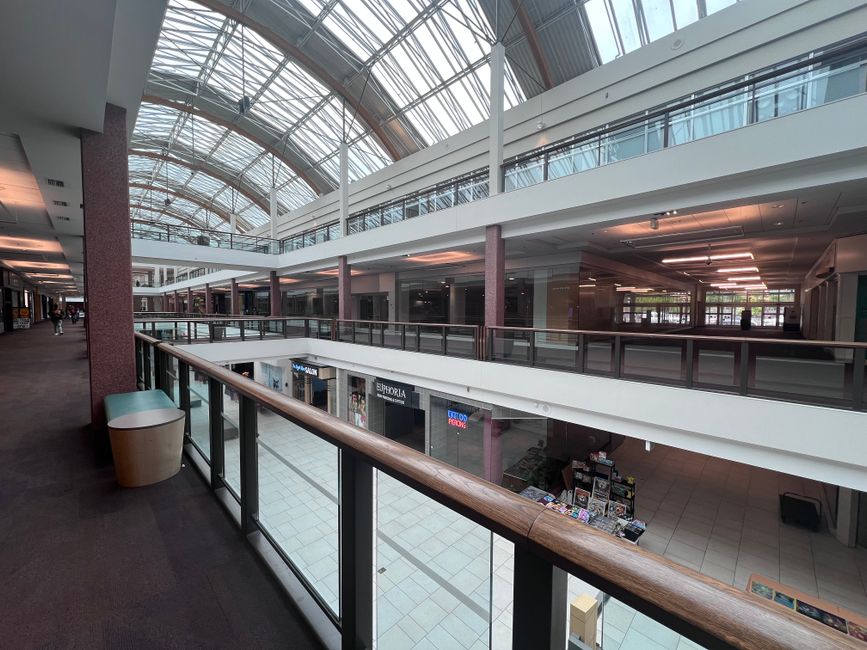
A shopping centre is a public place that is also private property. Shoppers expect to come and go freely, tenants expect their stores to be safe, and the landlord has to keep the parking lot, washrooms and walkways in order for everyone. Good shopping center security keeps that balance. This page explains what On Guard Security Ltd. provides for enclosed malls, open-air plazas and strip malls across Surrey and the Lower Mainland, how a shift is organised, and how to pick the right level of coverage.
Key takeaways
Shopping centre guards are mainly there to be seen, to help people and to report, not to act like police.
In BC, a property owner or someone they authorize can tell a person to leave the property, and a guard can do that on the owner’s behalf.
Parking lots and the hours after closing are where many plaza problems happen, so coverage should not stop at the doors.
Written post orders agreed with the property manager decide what guards do on every shift.
On Guard Security Ltd. provides licensed, JIBC-trained, unarmed guards with 24/7 support across the Lower Mainland.
We protect the shared parts of a retail property: entrances, concourses, food courts, washrooms, loading areas, parking lots and parkades. Individual stores look after their own shelves, but they all rely on the common areas being calm and well run. Our officers patrol those areas, answer questions, respond to tenant calls, deal with disputes before they grow, and write up anything that happens.
The work changes with the property. An enclosed mall has one building, set hours and heavy foot traffic inside. An open-air plaza or strip mall has storefronts opening straight onto the parking lot, tenants with different hours, and no single door to lock at night. We plan coverage around those patterns, not a standard template.
Theft inside stores is a separate job. If a tenant needs someone focused on its own merchandise, our retail loss prevention officers can work alongside the centre’s guards. Store owners who want to understand the wider toolkit can read our guide to methods that reduce shoplifting.
Most people who speak to a mall guard want directions, a lost child found, a lost wallet handed in or help with a medical issue. We train our officers to treat those moments as customer service, because that is how shoppers judge a centre.
Being easy to spot is also a legal requirement. Under BC’s Security Services Regulation, a guard’s uniform must show the word “SECURITY” on the chest and on the back of any jacket or vest, along with the name of the company that employs them. The same rules bar uniforms that look like police uniforms and bar guards from carrying a badge. Shoppers should always be able to tell a security officer from a police officer at a glance.
Key insight: In a shopping centre, being seen and being helpful are the main deterrents. Guards who spend their shift walking and talking to people prevent more trouble than guards who wait at a desk for something to happen.
Many plaza problems happen outside: vehicles broken into, carts left in drive aisles, people gathering behind the building after closing, or dumping near the bins. We add parking lot and loading area rounds to the patrol route. In the evening we check that rear doors are shut, that nobody is sheltering in stairwells or vestibules, and that lighting problems are reported to the property manager before they become a safety issue.
Once most tenants have closed, a full-time guard is not always needed. Many plazas switch to scheduled mobile patrol visits overnight, with GPS-verified checks at set points around the site. Dedicated parking properties can also use our parking lot security service.
When someone has to be asked to leave, BC’s Trespass Act sets the framework. An occupier, or a person the occupier authorizes, can tell someone orally or in writing to leave or to stop an activity. It is an offence not to leave as soon as practicable or to come back. Signs posted at the normal entrances can also give that notice. Guards do not have police powers under the Act. If someone refuses to leave or a situation becomes unsafe, our officers step back, keep watching and call the police.
A centre’s security works best when tenants know the guards by name. At the start of a contract we meet tenants, share the security desk or supervisor phone number, and find out what each business worries about most. That might be a pharmacy’s opening routine, a restaurant’s late close or a bank branch’s alarm.
We also run an employee safe-walk program that teaches tenant staff the basics of what to do in an emergency, so they know when to call the guard, when to call 911, and what information to pass on. Property managers receive written incident reports, and we flag repeat problems, such as the same broken light or the same group gathering on the same nights, so they can be fixed at the source.
Every site gets written post orders that we draft and agree with the property manager. They usually cover:
Opening and closing checks, including doors, washrooms, stairwells and service corridors.
Patrol routes and frequency, inside and outside.
Lost children, lost property and medical calls, including when to call 911.
Fire alarms and evacuation, in line with the building’s fire safety plan.
Which activities the property does not allow (for example skateboarding or soliciting) and how guards ask people to stop or leave.
Who to call after hours, and what goes into the daily report.
Key insight: Clear post orders make guards consistent. When every officer who works the site handles a lost child or a trespass request the same way, tenants and shoppers know what to expect.
On Guard Security Ltd. has been working in BC security for more than 10 years from our headquarters at 12565 88 Ave in Surrey. We serve Surrey, Vancouver, Burnaby, Richmond, Langley, Abbotsford and the Fraser Valley. Our guards are licensed and JIBC-trained, and each new hire spends a week training one-on-one with a senior officer. We are WorkSafeBC compliant, fully insured, available 24/7 and happy to take on seasonal or long-term contracts. You can check any guard or security business in the province’s licence status verification tool.
Inside individual stores it is usually called loss prevention, carried out by uniformed guards or plain-clothes loss prevention officers. In a mall’s shared spaces it is usually called mall or shopping centre security. In BC both are covered by the same security guard worker licence.
What are the security SOPs for a shopping mall?
A mall’s security SOPs, often called post orders, set out opening and closing checks, patrol routes, how to handle lost children and lost property, medical and fire emergencies, what activities are not allowed and how to ask someone to leave, who to call after hours, and how incidents are reported. They are agreed with the property manager.
Can mall security ask someone to leave the property?
Yes. Under BC’s Trespass Act, the occupier or someone they authorize can tell a person to leave or to stop an activity, and not leaving is an offence. Guards do not have police powers, so if someone refuses or the situation becomes unsafe, they call the police.
Does a small strip mall need its own security?
Not always full-time. Many strip malls use scheduled mobile patrol visits in the evenings and overnight, plus alarm response. A guard on site for the day is worth considering when there are regular problems during trading hours or in the parking lot.
How do I check that a guard is licensed?
Ask the security company for its business licence number and the guard’s security worker licence number, then look them up in the Province of BC’s free online licence status verification tool.
Google Review
Jack Willson
A pleasure to recommend company On Guard Security; mostly I enjoyed their quality services and effective response. They understand our security needs and able to ensure the best possible or professional services. Team members were professional, friendly experienced and highly approachable and live up to our expectations.
Google Review
James Cook
On guard security is my preferred choice when I need reliable security services. The team and professional service are unmatched. Their security guards and overall security are really dedicated. Recommend them for any security guard or private protection services!
Google Review
Patrick Parker
The reason I called on guard security is because they are local. They did not waste any time from the first phone call. I greatly appreciate the professionalism, service, and peace of mind offered by this security company.
Google Review
Thomas Chase
I was experiencing many incidences of shoplifting at my store and so I hired On Guard Security to provide professional guards. They did a fantastic job and now my business and merchandise are fully protected.
Google Review
Jon Wiltz
I was looking for a reliable and affordable security company for my clothing store and On Guard Security Ltd have done a fantastic job! I would definitely recommend them to fellow small business owners.
Google Review
Alan Cooper
I am happy with the performance of On Guard Security Staff assigned to our facilities. The guards respond quickly to needs and questions. I would definitely recommend this security company to others.
Google Review
~CrystalStarHomesLtd.
The guards were friendly and very cooperative. Excellent services with prices you can’t turn down. I had 24 hours security patrol on all sites. I would recommend OnGuard Security to anyone who’s looking for security services . Thanks so much Rajan really appreciate your services looking forward to meet again!
Google Review
~Jovan Dhillon
Very respectful staff, staff got to my site on time. Would book again
Google Review
~Aman Johal
I would highly recommend On Guard Security. We hired them for my brothers wedding and they provided great service. The staff always showed up on time.
Google Review
~Jason Powell
We used On Guard for our building while we were transitioning to our new intercom and entry system. They were always incredibly professional to deal with and the guards showed up well ahead of time and did a great job as we went through the process, which extended longer than expected. On Guard was also great at getting somebody on site the first night we needed them on very short notice. Overall, we were extremely happy with their service.
Google Review
~Balraj Malhi
Very good company to work with on gaurd ” Rajan is very proffesional and so are the guards. I would definetly reccomend On Guard security”Always Treat like a Famliy
Google Review
~kiran sohal
I hired on guard for my sisters wedding this past weekend, the guards were there 15 minutes early and made sure everything went smoothly , definitely will hire again
Google Review
~Sukh Brar
Provided an excellent service with my wedding events last week!! Very professional team of workers. Will definitely call for on guard’s services for future needs.