Construction Security for Sites Across Surrey and the Lower Mainland
Written by Paul Thandi, Operations Manager, On Guard Security Ltd. — 10+ years in BC security · Updated September 2026
A construction site changes every few weeks, and its security needs change with it. An open excavation, a framed building with no doors and a finished building waiting for occupancy each attract different problems. Good construction security follows the project instead of repeating the same plan from groundbreaking to handover. This page explains how On Guard Security Ltd. covers building sites across Surrey, Vancouver, Burnaby, Richmond, Langley, Abbotsford and the Fraser Valley, phase by phase: who controls the gate, what happens after crews leave, and how fire watch fits in when hot work starts.
Key takeaways
Construction security should change as the project moves from excavation to framing, lock-up and finishing.
The riskiest hours on most sites are evenings, weekends and holiday shutdowns, when no crew is on site.
Controlling the gate by day (who enters, which deliveries arrive) matters as much as overnight coverage.
Where a fire safety plan or the local fire department calls for a fire watch during hot work, a guard can carry it out and keep the log.
On Guard Security Ltd. provides licensed, JIBC-trained guards and mobile patrols from its Surrey headquarters, with 24/7 support.
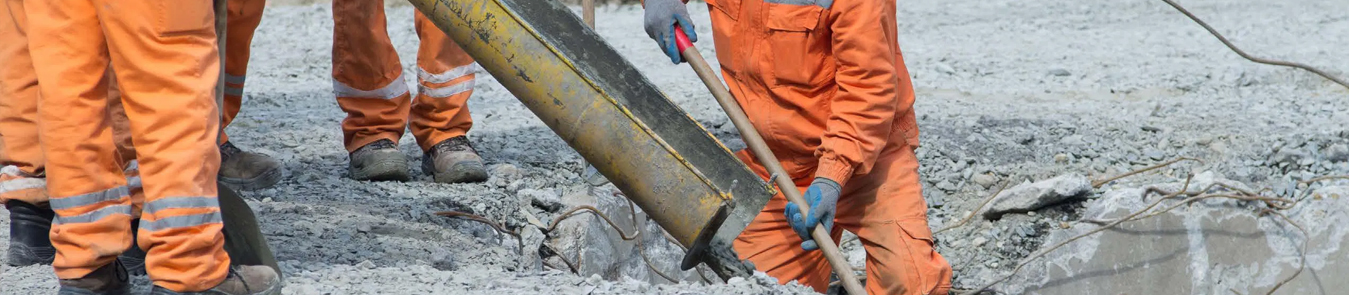
When your crew leaves each evening, the site is left with tools, equipment, fuel and materials behind a temporary fence. Anything that walks away has to be reordered, and while you wait for replacements the schedule slips. Trespass brings its own problems: people wandering into an open excavation or climbing scaffolding after dark, and graffiti or damage on work that was finished the day before.
Construction security is about closing those gaps with a person who is actually there. A guard notices a cut fence panel, a propped-open gate or a delivery dropped outside the fence. A camera can record the same event, but it can’t walk over and deal with it. That is why cameras and alarms work best as a complement to people, not a replacement for them.
Key insight: The expensive part of a site theft is often the delay while tools and materials are replaced, not the items themselves.
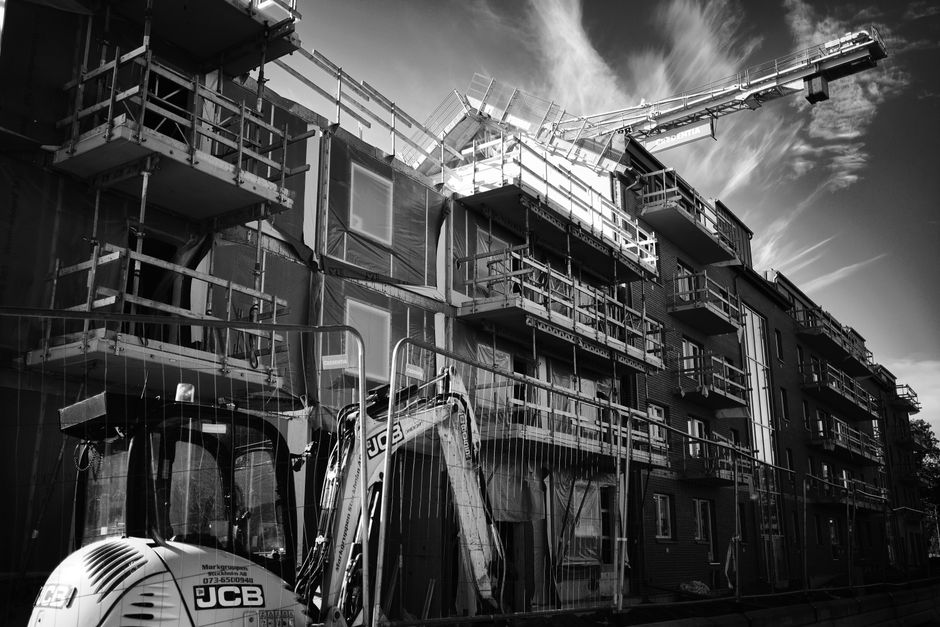
We plan construction security around the stage your build is at. The table below shows the pattern we usually start from. Your site layout, neighbours and incident history decide the final plan.
Project phase
What’s at risk
Coverage we usually suggest
Site preparation and excavation
Heavy equipment, fuel, open trenches, trespass
Scheduled mobile patrols overnight; on-site guard if equipment stays in an open area
On-site guard at night; gate control during deliveries
Finishing and pre-occupancy
Installed fixtures, damage to finished work, squatting
Mobile patrols with interior checks, or a guard until handover
Hot work at any stage
Fire risk from welding, cutting or torch work
Fire watch guard if your fire safety plan or fire department requires it
A single site often moves between these patterns over its lifetime. Our mobile patrol service suits early and late phases; a dedicated on-site guard suits the middle of the project, when the building holds the most material.
Daytime security is mostly about the gate. A guard can check that everyone coming onto site is expected, sign in visitors and trades, confirm deliveries against the schedule, and keep the public away from work zones. On busy sites with several subcontractors, a single point of control makes it much easier to know who was on site and when.
At the end of the day the guard walks the fence line, checks that storage containers and site offices are locked, and confirms that equipment is parked where it should be. Any gaps, such as a fence panel pulled loose or a light that has failed, go into the report so your site super can fix them before the next night.
Every guard doing this work in BC must hold a valid security worker licence under the Security Services Act, and a licensed security business may only put licensed workers on your site. You can check both with the province’s licence status verification tool.
Welding, cutting and torch work can create a fire risk that lasts after the crew has gone home. Richmond Fire-Rescue’s published fire watch program describes a fire watch as a temporary measure when a building’s normal fire or life-safety protection is reduced or out of service. It lists hot work among the temporary hazards that can trigger one, and it expects patrols to be recorded in a log kept at the building. Other municipalities set their own rules, so check your fire safety plan and your local fire department.
When a fire watch is required, our guards patrol the set route, watch for smoke, heat and hazards, and keep the log. Our guide to fire watch requirements in BC explains the process, and our fire watch service covers buildings outside of construction too.
Key insight: A site guard and a fire watch guard can be the same person, but only if the fire watch route and log come first while hot work or a system outage is in effect.
On Guard Security Ltd. has worked in BC security for more than 10 years and is based at 12565 88 Ave in Surrey. Every guard is licensed and JIBC-trained, and each new hire spends a week training one-on-one with a senior officer before working alone. We’re WorkSafeBC compliant, fully insured and reachable 24/7, and we take short contracts for a single phase as well as coverage for a whole build.
Most buyers compare three kinds of coverage: static guards who stay at one post, mobile patrol guards who visit several sites on a schedule, and specialist posts such as fire watch or concierge. Construction sites often use a mix of static and mobile coverage, plus fire watch during hot work.
What are the responsibilities of a construction security guard?
A construction security guard controls who comes onto site, checks the fence, containers and equipment, watches for trespass and hazards, calls police and the site contact when something happens, and writes a report of every shift. Where required, the guard also carries out fire watch patrols and keeps the log.
What security is needed on a construction site?
It depends on the phase and the location. Most sites need a sound fence, lighting and locked storage as a base, then either scheduled patrols or an on-site guard for evenings and weekends. Busy sites add daytime gate control, and hot work may call for a fire watch.
Can guards cover weekends and holiday shutdowns on a construction site?
Yes. On Guard Security Ltd. provides 24/7 coverage, so you can book guards only for the hours the site is empty, such as nights, weekends and holiday shutdowns, and scale back when crews return.
Does a guard replace fencing, lighting and locked storage?
No. A guard works best alongside them. Fencing, lighting and locked containers make a site harder to enter, and the guard checks that they are working and reports anything that fails.
Google Review
Jack Willson
A pleasure to recommend company On Guard Security; mostly I enjoyed their quality services and effective response. They understand our security needs and able to ensure the best possible or professional services. Team members were professional, friendly experienced and highly approachable and live up to our expectations.
Google Review
James Cook
On guard security is my preferred choice when I need reliable security services. The team and professional service are unmatched. Their security guards and overall security are really dedicated. Recommend them for any security guard or private protection services!
Google Review
Patrick Parker
The reason I called on guard security is because they are local. They did not waste any time from the first phone call. I greatly appreciate the professionalism, service, and peace of mind offered by this security company.
Google Review
Thomas Chase
I was experiencing many incidences of shoplifting at my store and so I hired On Guard Security to provide professional guards. They did a fantastic job and now my business and merchandise are fully protected.
Google Review
Jon Wiltz
I was looking for a reliable and affordable security company for my clothing store and On Guard Security Ltd have done a fantastic job! I would definitely recommend them to fellow small business owners.
Google Review
Alan Cooper
I am happy with the performance of On Guard Security Staff assigned to our facilities. The guards respond quickly to needs and questions. I would definitely recommend this security company to others.
Google Review
~CrystalStarHomesLtd.
The guards were friendly and very cooperative. Excellent services with prices you can’t turn down. I had 24 hours security patrol on all sites. I would recommend OnGuard Security to anyone who’s looking for security services . Thanks so much Rajan really appreciate your services looking forward to meet again!
Google Review
~Jovan Dhillon
Very respectful staff, staff got to my site on time. Would book again
Google Review
~Aman Johal
I would highly recommend On Guard Security. We hired them for my brothers wedding and they provided great service. The staff always showed up on time.
Google Review
~Jason Powell
We used On Guard for our building while we were transitioning to our new intercom and entry system. They were always incredibly professional to deal with and the guards showed up well ahead of time and did a great job as we went through the process, which extended longer than expected. On Guard was also great at getting somebody on site the first night we needed them on very short notice. Overall, we were extremely happy with their service.
Google Review
~Balraj Malhi
Very good company to work with on gaurd ” Rajan is very proffesional and so are the guards. I would definetly reccomend On Guard security”Always Treat like a Famliy
Google Review
~kiran sohal
I hired on guard for my sisters wedding this past weekend, the guards were there 15 minutes early and made sure everything went smoothly , definitely will hire again
Google Review
~Sukh Brar
Provided an excellent service with my wedding events last week!! Very professional team of workers. Will definitely call for on guard’s services for future needs.