Gated Community Security in Surrey BC: What Professional Guards Add
Gated Community Security in Surrey BC: What Professional Guards Add
Written by Paul Thandi, Operations Manager, On Guard Security Ltd. — 10+ years in BC security · Updated September 2026
Gated community security is often assumed to come with the gate. It doesn't. A barrier arm, a keypad and a fence slow people down, but they can't tell a resident's guest from a stranger, notice a door propped open in the amenity building or write the report your strata council needs after an incident. This guide is for strata councils, property managers and homeowner associations in Surrey and across the Lower Mainland. It covers what professional guards add to a gated community, where technology alone falls short, why gate codes leak, and how to decide what level of coverage your community actually needs.
Key takeaways
A gate controls a route, not a community. It keeps honest people honest; it does not stop someone who follows a car in, walks in beside it, or already has the code.
Gated community security works best as layers: controlled access at the entrance, visitor and trade management, patrols of the interior, and written reporting to the strata council.
Gate codes leak through delivery drivers, trades, former residents and guests, so codes need a change schedule and a process, not just a keypad.
A guard adds judgment and a written record; cameras and access systems add coverage and evidence. Most communities need some of each.
In a strata, the council directs security under the Strata Property Act, so contracts, post orders and reports should be written to support council decisions.
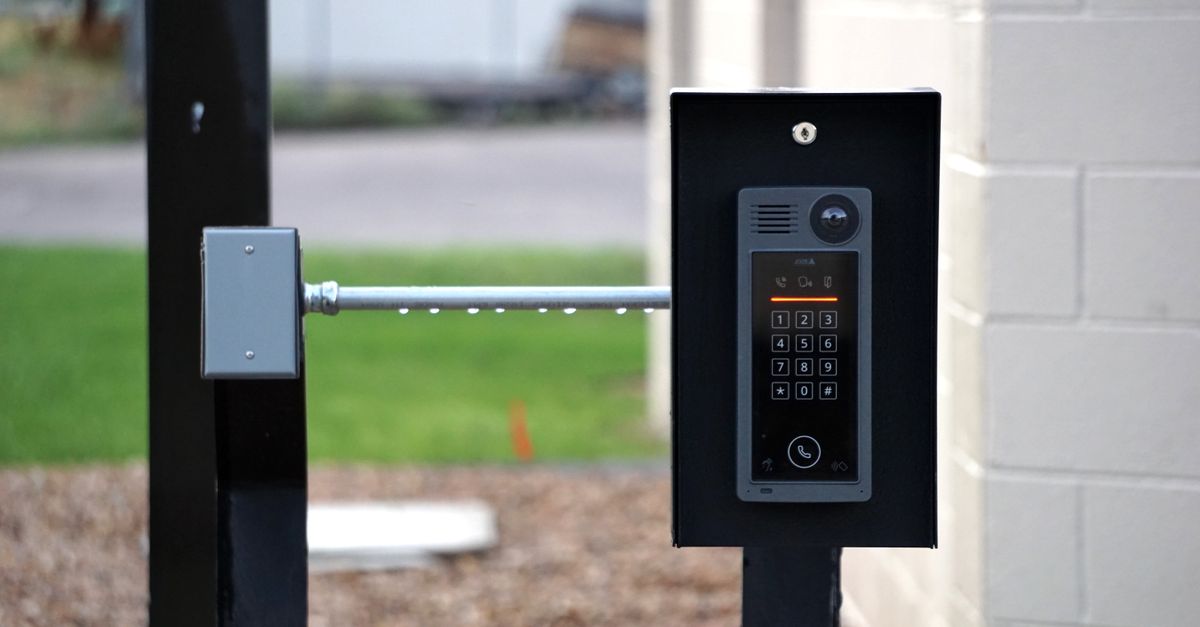
"Gated security" describes controlling who can enter a residential community through a limited number of entrances, usually a vehicle gate with a pedestrian gate beside it, backed by a fence or natural boundary. In its simplest form it is a keypad, fob reader or remote opener. In its fuller form it adds a staffed gatehouse, visitor verification, interior patrols and a reporting process.
In a townhouse strata or bare-land strata, the gate, roads, fences and amenity buildings are usually common property. That matters, because the strata corporation, not individual owners, decides how that property is controlled. Under section 119 of the Strata Property Act, bylaws may provide for the control, management, maintenance, use and enjoyment of common property. Gate hours, visitor rules, parking and contractor access are typically set there.
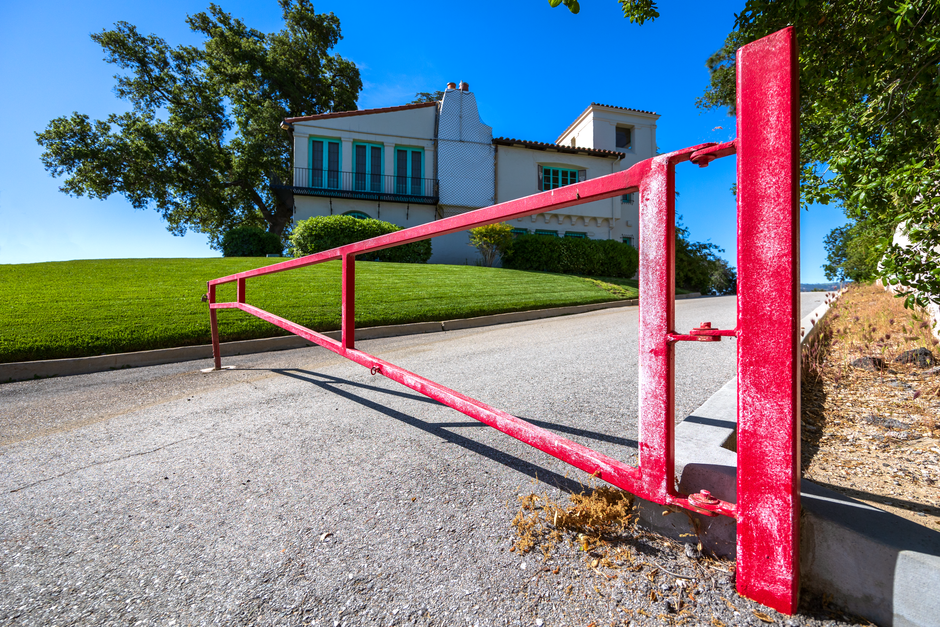
A gate reduces casual through-traffic and makes it harder to drive in and out unnoticed. It also tends to create a false sense of security. Residents stop locking cars in their own driveway, leave garage doors open and wave through people who look like they belong. The weak points are predictable:
Tailgating. A second car follows the first before the arm comes down, or a pedestrian walks in beside a vehicle.
Shared or old codes. Codes handed to trades, couriers and guests stay valid long after they're needed.
Fence lines and walking paths. Many communities have a pedestrian connection to a park or neighbouring street that is easier to use than the gate.
Equipment faults. A gate stuck open for a weekend, waiting for a repair, is the same as no gate.
Nobody watching. Without a person or a monitored camera, no one notices any of the above until something is missing.
So the honest answer is: a gated community is as secure as the process behind the gate. The physical barrier is a starting point, not the finished system.
Key insight: A gate is a filter, not a lock. Its value depends on someone deciding who gets through and noticing when the filter is bypassed.
A staffed entrance changes access from "anyone with the code" to "people we can account for". A guard at the gatehouse typically handles four groups differently:
Residents pass through on their fob, remote or plate, with the guard watching for a second vehicle following.
Visitors are checked against a resident-approved list or confirmed with the resident by phone, then logged with the unit they're visiting.
Deliveries are directed to the right address or a parcel area, depending on your rules, and logged so a missing package can be traced.
Trades and contractors are checked against booked work orders, given the right parking and hours, and signed out when they leave.
The guard's job is not to interrogate. It is to apply the community's rules the same way on every shift, politely and without exceptions. Consistency is what residents notice. If one guard waves everyone through and the next one checks everyone, the rules lose their authority quickly. Written post orders, agreed with the council, keep every guard on the same standard.
Every gated community eventually discovers its code is common knowledge. It happens in ordinary ways: a resident gives it to a food delivery app, a landscaping crew shares it with a new worker, a former tenant never had theirs removed, or a code is written on the keypad housing to help a visitor. Some systems also keep an installer or default code that nobody changed after installation.
There is no legitimate "universal code" that opens every gated community. Emergency services access is arranged property by property with the local fire department and the gate installer. But in practice, a code that has been in use for a year is close to universal for anyone who has worked in the community. Practical fixes:
Change shared codes on a set schedule and after any known leak.
Give trades temporary codes tied to a job, and cancel them when the job ends.
Remove departed residents' fobs and codes as part of the move-out process.
Review the access system's event log, where your system keeps one, for use at unusual hours.
Where the risk justifies it, put a guard at the entrance during the busiest or riskiest hours so the code is not the only control.
Most incidents in gated communities don't happen at the gate. They happen on the interior roads, in visitor parking, around the clubhouse and pool, at mailboxes, along back fences and in underground or shared parking. A guard who only stands at the entrance can't see those areas.
That's why many councils combine an entrance post with scheduled interior patrols, or use GPS-tracked mobile patrol visits overnight when a full-time gatehouse isn't justified. On a patrol, a guard checks amenity doors are locked, looks for open garage doors and unfamiliar vehicles, checks fence lines and walking paths, and notes maintenance problems such as broken lighting or a failed gate motor. Every check is logged, so the council can see when each area was visited.
Cameras, licence-plate readers, fob systems and virtual gatehouse services are useful, and many communities already have some of them. On Guard does not sell or install these systems, so we look at them as a complement to guarding, not a competitor. The practical difference is judgment on site.
Question
Technology only
Professional guard
Guard + technology
Stops tailgating as it happens?
Records it; usually can't stop it
Can see it and intervene politely
Guard intervenes; cameras keep evidence
Verifies visitors and trades?
Only if a resident answers a call or code
Checks lists, work orders and calls residents
Guard verifies; system logs entries
Covers interior roads and amenities?
Only where cameras point
Yes, on patrol rounds
Patrols plus camera coverage between rounds
Handles a gate stuck open?
Sends an alert, if configured
Controls the entrance manually until repair
Alert plus a person on site
Written reports for council?
Raw footage and logs
Shift and incident reports
Reports that reference footage
Relative ongoing cost
Lowest after installation
Highest, billed by the hour
Depends on how many hours are staffed
For many communities, the best value is technology around the clock plus staffed or patrolled coverage during the hours when problems actually occur.
A visitor log, plate record or ID check collects personal information, and residents and visitors will ask what happens to it. In BC, private organizations, including strata corporations, handle personal information under the Personal Information Protection Act. Section 11 says an organization may collect personal information only for purposes a reasonable person would consider appropriate in the circumstances.
In practice, that means collecting only what the community needs (name, unit visited, time in and out, and possibly a plate), telling people why it's collected, keeping logs secure and not holding them longer than necessary. Your council should settle these points in writing before the post starts, and your security provider should follow them. If you're unsure, get advice specific to your strata.
Under section 26 of the Strata Property Act, the council must exercise the powers and perform the duties of the strata corporation, including enforcing bylaws and rules. Security reports are how a council knows what's happening and how it backs up bylaw decisions. Good reporting for a gated community includes:
Daily shift reports: patrol times, visitor and trade counts, gate or lighting faults, and anything unusual.
Incident reports: what happened, when, who was involved, what the guard did and who was notified, written the same shift.
A regular summary for council meetings, showing patterns rather than raw logs.
Key insight: The report is part of the product. A council that can see when and where problems happen can adjust coverage, enforce bylaws fairly and answer owners' questions at the AGM.
Gated community security doesn't have to mean a guard at the gate 24 hours a day. Common setups, from lightest to fullest:
Mobile patrol only: several randomized visits a night to check the gate, amenities and interior roads.
Evening or overnight gate post: a guard at the entrance during the hours with the most unwanted traffic.
Gate post plus interior patrols: one guard at the gatehouse and a second on foot or in a vehicle, or a single guard alternating both, depending on size.
Full-time staffed gatehouse: for larger communities with constant visitor and trade traffic.
On Guard Security Ltd. has protected Lower Mainland properties for more than 10 years from our base in Surrey. For gated communities, we provide gatehouse posts, interior patrols and residential security plans built around your bylaws and your incident history. Every guard is licensed and JIBC-trained, and new officers complete a week of one-on-one training with a senior officer before working a post alone. We're WorkSafeBC compliant, fully insured and reachable 24/7.
We'll walk your community with a council member, look at the entrances, fence lines and amenity areas, and recommend the smallest amount of coverage that addresses the real problems, including telling you when a patrol will do the job instead of a full-time post. Call 778-990-5070 or book a free consultation.
A gate reduces casual through-traffic, but it can be bypassed by tailgating, shared codes, fence lines and equipment faults. A gated community is as secure as the process behind the gate: visitor verification, code management, interior patrols and someone who notices and reports problems.
What is the meaning of gated security?
Gated security means controlling who enters a residential community through a limited number of entrances, usually a vehicle and pedestrian gate backed by a fence. It can be as simple as a keypad or as complete as a staffed gatehouse with visitor checks, interior patrols and written reports to the strata council.
What are the downsides of living in a gated community?
From a security point of view, the main downside is a false sense of safety: residents may leave cars, garages and doors unlocked because there is a gate. Gates also add maintenance costs, can slow visitors and deliveries, and need clear rules for codes and trades to work as intended.
Is there a universal code to get into gated communities?
No. There is no legitimate universal code, and emergency access is arranged property by property with the fire department and gate installer. In practice, though, a shared code that is rarely changed becomes widely known, so codes should be changed on a schedule and trade codes cancelled when jobs end.
How much does gated community security cost?
Cost depends mainly on staffed hours, the number of posts, overnight and holiday coverage and contract length. Mobile patrol visits cost less than a staffed gatehouse, and many communities combine a gate post during the busiest hours with patrols at other times. We quote after walking the site.
Google Review
Jack Willson
A pleasure to recommend company On Guard Security; mostly I enjoyed their quality services and effective response. They understand our security needs and able to ensure the best possible or professional services. Team members were professional, friendly experienced and highly approachable and live up to our expectations.
Google Review
James Cook
On guard security is my preferred choice when I need reliable security services. The team and professional service are unmatched. Their security guards and overall security are really dedicated. Recommend them for any security guard or private protection services!
Google Review
Patrick Parker
The reason I called on guard security is because they are local. They did not waste any time from the first phone call. I greatly appreciate the professionalism, service, and peace of mind offered by this security company.
Google Review
Thomas Chase
I was experiencing many incidences of shoplifting at my store and so I hired On Guard Security to provide professional guards. They did a fantastic job and now my business and merchandise are fully protected.
Google Review
Jon Wiltz
I was looking for a reliable and affordable security company for my clothing store and On Guard Security Ltd have done a fantastic job! I would definitely recommend them to fellow small business owners.
Google Review
Alan Cooper
I am happy with the performance of On Guard Security Staff assigned to our facilities. The guards respond quickly to needs and questions. I would definitely recommend this security company to others.
Google Review
~CrystalStarHomesLtd.
The guards were friendly and very cooperative. Excellent services with prices you can’t turn down. I had 24 hours security patrol on all sites. I would recommend OnGuard Security to anyone who’s looking for security services . Thanks so much Rajan really appreciate your services looking forward to meet again!
Google Review
~Jovan Dhillon
Very respectful staff, staff got to my site on time. Would book again
Google Review
~Aman Johal
I would highly recommend On Guard Security. We hired them for my brothers wedding and they provided great service. The staff always showed up on time.
Google Review
~Jason Powell
We used On Guard for our building while we were transitioning to our new intercom and entry system. They were always incredibly professional to deal with and the guards showed up well ahead of time and did a great job as we went through the process, which extended longer than expected. On Guard was also great at getting somebody on site the first night we needed them on very short notice. Overall, we were extremely happy with their service.
Google Review
~Balraj Malhi
Very good company to work with on gaurd ” Rajan is very proffesional and so are the guards. I would definetly reccomend On Guard security”Always Treat like a Famliy
Google Review
~kiran sohal
I hired on guard for my sisters wedding this past weekend, the guards were there 15 minutes early and made sure everything went smoothly , definitely will hire again
Google Review
~Sukh Brar
Provided an excellent service with my wedding events last week!! Very professional team of workers. Will definitely call for on guard’s services for future needs.