Gated Community Security in Surrey BC: What Professional Guards Add

Licensed security guard checking a visitor at the entrance gatehouse of a gated townhouse community, illustrating gated community security in Surrey BC

Gated community security is often assumed to come with the gate. It doesn’t. A barrier arm, a keypad and a fence slow people down, but they can’t tell a resident’s guest from a stranger, notice a door propped open in the amenity building or write the report your strata council needs after an incident. This guide is for strata councils, property managers and homeowner associations in Surrey and across the Lower Mainland. It covers what professional guards add to a gated community, where technology alone falls short, why gate codes leak, and how to decide what level of coverage your community actually needs.

Key takeaways

  • A gate controls a route, not a community. It keeps honest people honest; it does not stop someone who follows a car in, walks in beside it, or already has the code.
  • Gated community security works best as layers: controlled access at the entrance, visitor and trade management, patrols of the interior, and written reporting to the strata council.
  • Gate codes leak through delivery drivers, trades, former residents and guests, so codes need a change schedule and a process, not just a keypad.
  • A guard adds judgment and a written record; cameras and access systems add coverage and evidence. Most communities need some of each.
  • In a strata, the council directs security under the Strata Property Act, so contracts, post orders and reports should be written to support council decisions.

What gated community security means

“Gated security” describes controlling who can enter a residential community through a limited number of entrances, usually a vehicle gate with a pedestrian gate beside it, backed by a fence or natural boundary. In its simplest form it is a keypad, fob reader or remote opener. In its fuller form it adds a staffed gatehouse, visitor verification, interior patrols and a reporting process.
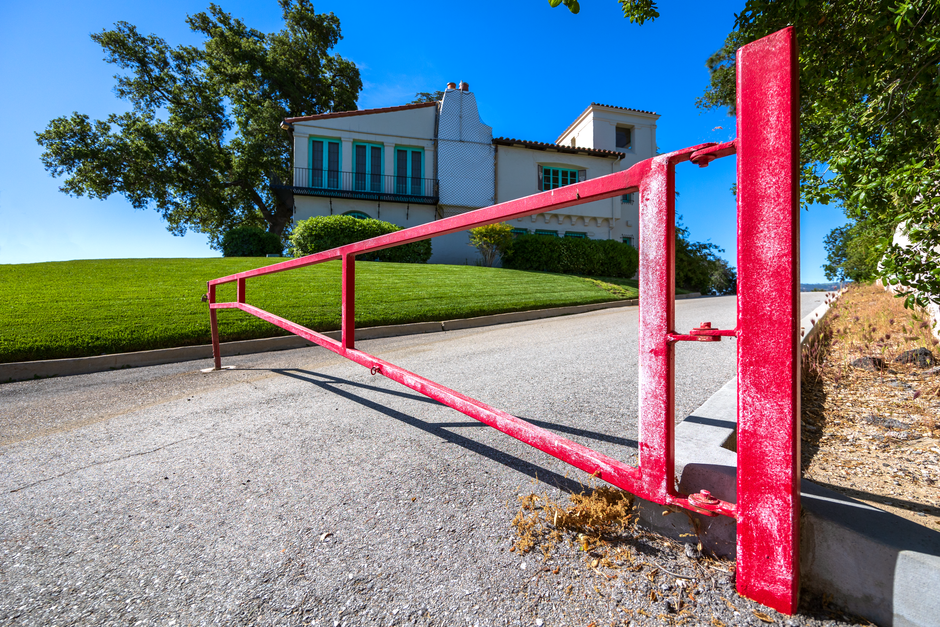
Licensed security guard checking a visitor at the entrance gatehouse of a gated townhouse community, illustrating gated community security in Surrey BC

In a townhouse strata or bare-land strata, the gate, roads, fences and amenity buildings are usually common property. That matters, because the strata corporation, not individual owners, decides how that property is controlled. Under section 119 of the Strata Property Act, bylaws may provide for the control, management, maintenance, use and enjoyment of common property. Gate hours, visitor rules, parking and contractor access are typically set there.

How secure is a gated community, really?

A gate reduces casual through-traffic and makes it harder to drive in and out unnoticed. It also tends to create a false sense of security. Residents stop locking cars in their own driveway, leave garage doors open and wave through people who look like they belong. The weak points are predictable:

  • Tailgating. A second car follows the first before the arm comes down, or a pedestrian walks in beside a vehicle.
  • Shared or old codes. Codes handed to trades, couriers and guests stay valid long after they’re needed.
  • Fence lines and walking paths. Many communities have a pedestrian connection to a park or neighbouring street that is easier to use than the gate.
  • Equipment faults. A gate stuck open for a weekend, waiting for a repair, is the same as no gate.
  • Nobody watching. Without a person or a monitored camera, no one notices any of the above until something is missing.

So the honest answer is: a gated community is as secure as the process behind the gate. The physical barrier is a starting point, not the finished system.

Key insight: A gate is a filter, not a lock. Its value depends on someone deciding who gets through and noticing when the filter is bypassed.

Access control at the gate: residents, visitors and trades

A staffed entrance changes access from “anyone with the code” to “people we can account for”. A guard at the gatehouse typically handles four groups differently:

  • Residents pass through on their fob, remote or plate, with the guard watching for a second vehicle following.
  • Visitors are checked against a resident-approved list or confirmed with the resident by phone, then logged with the unit they’re visiting.
  • Deliveries are directed to the right address or a parcel area, depending on your rules, and logged so a missing package can be traced.
  • Trades and contractors are checked against booked work orders, given the right parking and hours, and signed out when they leave.

The guard’s job is not to interrogate. It is to apply the community’s rules the same way on every shift, politely and without exceptions. Consistency is what residents notice. If one guard waves everyone through and the next one checks everyone, the rules lose their authority quickly. Written post orders, agreed with the council, keep every guard on the same standard.

Why gate codes leak, and what to do about it

Every gated community eventually discovers its code is common knowledge. It happens in ordinary ways: a resident gives it to a food delivery app, a landscaping crew shares it with a new worker, a former tenant never had theirs removed, or a code is written on the keypad housing to help a visitor. Some systems also keep an installer or default code that nobody changed after installation.

There is no legitimate “universal code” that opens every gated community. Emergency services access is arranged property by property with the local fire department and the gate installer. But in practice, a code that has been in use for a year is close to universal for anyone who has worked in the community. Practical fixes:

  • Change shared codes on a set schedule and after any known leak.
  • Give trades temporary codes tied to a job, and cancel them when the job ends.
  • Remove departed residents’ fobs and codes as part of the move-out process.
  • Review the access system’s event log, where your system keeps one, for use at unusual hours.
  • Where the risk justifies it, put a guard at the entrance during the busiest or riskiest hours so the code is not the only control.

Patrols beyond the gate

Most incidents in gated communities don’t happen at the gate. They happen on the interior roads, in visitor parking, around the clubhouse and pool, at mailboxes, along back fences and in underground or shared parking. A guard who only stands at the entrance can’t see those areas.

That’s why many councils combine an entrance post with scheduled interior patrols, or use GPS-tracked mobile patrol visits overnight when a full-time gatehouse isn’t justified. On a patrol, a guard checks amenity doors are locked, looks for open garage doors and unfamiliar vehicles, checks fence lines and walking paths, and notes maintenance problems such as broken lighting or a failed gate motor. Every check is logged, so the council can see when each area was visited.

Guards vs a technology-only approach

Cameras, licence-plate readers, fob systems and virtual gatehouse services are useful, and many communities already have some of them. On Guard does not sell or install these systems, so we look at them as a complement to guarding, not a competitor. The practical difference is judgment on site.

Question Technology only Professional guard Guard + technology
Stops tailgating as it happens? Records it; usually can’t stop it Can see it and intervene politely Guard intervenes; cameras keep evidence
Verifies visitors and trades? Only if a resident answers a call or code Checks lists, work orders and calls residents Guard verifies; system logs entries
Covers interior roads and amenities? Only where cameras point Yes, on patrol rounds Patrols plus camera coverage between rounds
Handles a gate stuck open? Sends an alert, if configured Controls the entrance manually until repair Alert plus a person on site
Written reports for council? Raw footage and logs Shift and incident reports Reports that reference footage
Relative ongoing cost Lowest after installation Highest, billed by the hour Depends on how many hours are staffed

For many communities, the best value is technology around the clock plus staffed or patrolled coverage during the hours when problems actually occur.

Visitor logs and privacy

A visitor log, plate record or ID check collects personal information, and residents and visitors will ask what happens to it. In BC, private organizations, including strata corporations, handle personal information under the Personal Information Protection Act. Section 11 says an organization may collect personal information only for purposes a reasonable person would consider appropriate in the circumstances.

In practice, that means collecting only what the community needs (name, unit visited, time in and out, and possibly a plate), telling people why it’s collected, keeping logs secure and not holding them longer than necessary. Your council should settle these points in writing before the post starts, and your security provider should follow them. If you’re unsure, get advice specific to your strata.

Reporting to the strata council

Under section 26 of the Strata Property Act, the council must exercise the powers and perform the duties of the strata corporation, including enforcing bylaws and rules. Security reports are how a council knows what’s happening and how it backs up bylaw decisions. Good reporting for a gated community includes:

  • Daily shift reports: patrol times, visitor and trade counts, gate or lighting faults, and anything unusual.
  • Incident reports: what happened, when, who was involved, what the guard did and who was notified, written the same shift.
  • A regular summary for council meetings, showing patterns rather than raw logs.

Key insight: The report is part of the product. A council that can see when and where problems happen can adjust coverage, enforce bylaws fairly and answer owners’ questions at the AGM.

Choosing the right level of coverage

Gated community security doesn’t have to mean a guard at the gate 24 hours a day. Common setups, from lightest to fullest:

  • Mobile patrol only: several randomized visits a night to check the gate, amenities and interior roads.
  • Evening or overnight gate post: a guard at the entrance during the hours with the most unwanted traffic.
  • Gate post plus interior patrols: one guard at the gatehouse and a second on foot or in a vehicle, or a single guard alternating both, depending on size.
  • Full-time staffed gatehouse: for larger communities with constant visitor and trade traffic.

Cost is driven mainly by staffed hours, the number of posts, overnight and holiday coverage, and contract length. Our guide to what security guards cost in BC explains the billing models. Before signing with any provider, confirm the company and each guard hold a valid BC licence using the province’s licence status verification tool, and ask for proof of insurance and WorkSafeBC coverage. Our checklist for choosing a security company in BC lists the rest.

Talk to On Guard Security

On Guard Security Ltd. has protected Lower Mainland properties for more than 10 years from our base in Surrey. For gated communities, we provide gatehouse posts, interior patrols and residential security plans built around your bylaws and your incident history. Every guard is licensed and JIBC-trained, and new officers complete a week of one-on-one training with a senior officer before working a post alone. We’re WorkSafeBC compliant, fully insured and reachable 24/7.

We’ll walk your community with a council member, look at the entrances, fence lines and amenity areas, and recommend the smallest amount of coverage that addresses the real problems, including telling you when a patrol will do the job instead of a full-time post. Call 778-990-5070 or book a free consultation.

Frequently asked questions

How secure is a gated community?

A gate reduces casual through-traffic, but it can be bypassed by tailgating, shared codes, fence lines and equipment faults. A gated community is as secure as the process behind the gate: visitor verification, code management, interior patrols and someone who notices and reports problems.

What is the meaning of gated security?

Gated security means controlling who enters a residential community through a limited number of entrances, usually a vehicle and pedestrian gate backed by a fence. It can be as simple as a keypad or as complete as a staffed gatehouse with visitor checks, interior patrols and written reports to the strata council.

What are the downsides of living in a gated community?

From a security point of view, the main downside is a false sense of safety: residents may leave cars, garages and doors unlocked because there is a gate. Gates also add maintenance costs, can slow visitors and deliveries, and need clear rules for codes and trades to work as intended.

Is there a universal code to get into gated communities?

No. There is no legitimate universal code, and emergency access is arranged property by property with the fire department and gate installer. In practice, though, a shared code that is rarely changed becomes widely known, so codes should be changed on a schedule and trade codes cancelled when jobs end.

How much does gated community security cost?

Cost depends mainly on staffed hours, the number of posts, overnight and holiday coverage and contract length. Mobile patrol visits cost less than a staffed gatehouse, and many communities combine a gate post during the busiest hours with patrols at other times. We quote after walking the site.


How Much Does a Security Guard Cost in BC? 2026 Pricing Guide

On Guard Security Ltd. - 2

Security guard cost is one of the first questions property managers, business owners and event planners ask us, and it’s a fair one. The honest answer is that there’s no single price: what you pay depends on how many hours you need, when those hours fall, what the guard has to do and whether you need someone on site or a patrol that visits. This guide explains the real cost drivers in BC, the billing models security companies use, what the public wage data says about guard pay, and why a contract rate is always well above a guard’s hourly wage. It also shows how to get an accurate quote without paying for coverage you don’t need.

Key takeaways

  • Security guard cost in BC is driven by hours, timing (nights, weekends, statutory holidays), the type of service and the site’s risk, not by a fixed price list.
  • Static guards are usually billed per guard, per hour, often with a minimum shift length. Mobile patrol is usually billed per visit or per month.
  • Government of Canada Job Bank data shows a median wage of $22.75 an hour for security guards in BC (reference period 2023-2024, updated November 19, 2025). That’s what guards earn, not what clients pay.
  • A contract rate also covers statutory payroll costs, WorkSafeBC premiums, required liability insurance, supervision, training, scheduling and 24/7 backup.
  • Unusually low quotes usually mean something is missing: licensing, insurance, supervision or reliable shift coverage.

What drives security guard cost in BC?

Every security quote in BC is built from the same handful of variables. Once you know them, you can read any quote, compare providers fairly and see where your own requirements push the price up or down.

Licensed security guard reviewing a shift schedule with a property manager in a Surrey office, illustrating security guard cost planning in BC
  • Total hours of coverage. The biggest factor by far. A guard for a four-hour event and a guard posted 24/7 all year are completely different budgets.
  • When the hours fall. Overnight, weekend and statutory holiday shifts cost more to staff, and holiday work carries premium pay under BC employment law.
  • Type of service. A static guard on site, a mobile patrol that visits several times a night, a fire watch with a timed log, a concierge at a front desk and an event team each have different staffing and billing structures.
  • Number of guards. Large sites, multiple entrances and events with crowds or alcohol may need more than one guard at a time.
  • Site risk and duties. A quiet office lobby is not the same post as a construction site with open perimeters or a store with an active theft problem. More complex duties need more experienced guards and closer supervision.
  • Contract length and notice. Ongoing contracts can be scheduled efficiently. Same-day or overnight requests have to be staffed at short notice.
  • Reporting and technology. GPS-tracked patrols, checkpoint scans, photo reports and daily activity reports all take time and systems to deliver.

Key insight: The fastest way to control security guard cost is to control hours. Matching coverage to when problems actually happen usually saves more than negotiating the hourly rate.

How security companies bill: the main pricing models

Most BC security companies use a small number of billing models. The table below shows how each common service is usually priced and what moves the number. It describes structure, not dollar figures, because rates depend on your site and schedule.

Service How it’s usually billed What moves the price
Static (on-site) guard Per guard, per hour, often with a minimum shift length Hours, nights and holidays, number of posts, duties
Mobile patrol Per visit, or a monthly fee for a set number of visits Visits per night, time on site per visit, lock-up or unlock duties, distance on the route
Alarm response Per call-out, sometimes with a monthly standby fee Time of call, time spent securing the site, follow-up required
Fire watch Per guard, per hour, usually with a minimum call-out Patrol interval required, building size, how long the system is impaired, short-notice start
Event security Per guard, per hour, with a minimum booking Guest count, alcohol, entry points, event length, date (holidays and peak summer weekends)
Concierge security Per hour, usually on an ongoing monthly contract Front-desk hours, number of desks, service expectations

Mobile patrol is often the most budget-friendly option for sites that don’t need someone there all the time. Our GPS-tracked mobile patrol is priced by the visit, so you pay for the checks your property actually needs. When a building’s fire alarm or sprinkler system is out of service, our fire watch service is billed by the hour for as long as the impairment lasts.

What BC security guards earn: the public wage data

The most reliable public benchmark is the Government of Canada’s Job Bank, which publishes wage data for security guards and related security service occupations (NOC 64410). As shown on the Job Bank wage report (wages updated November 19, 2025; reference period 2023-2024; source: Statistics Canada Labour Force Survey):

  • British Columbia: low $18.25, median $22.75, high $32.00 per hour.
  • Lower Mainland–Southwest region: low $18.25, median $23.00, high $34.00 per hour.

Two points matter when you read these numbers. First, they are what guards are paid, not what a client is charged. Second, they cover a broad occupation group and a reference period that is now more than a year old. BC’s general minimum wage is also adjusted every June 1 in line with the province’s consumer price index under the Employment Standards Act, so the wage floor rises each year and quotes from previous years may be out of date.

Why a contract rate sits above a guard’s wage

Clients are sometimes surprised by the gap between a guard’s wage and the hourly rate on a security contract. That gap isn’t profit. It pays for everything that makes a guard legal, insured and reliable on your site:

  • Statutory payroll costs. Employer contributions to CPP and EI, vacation pay and statutory holiday pay.
  • WorkSafeBC premiums. Employers pay for workplace injury coverage for every guard.
  • Liability insurance. Under the Security Services Regulation, a licensed security business must carry general liability insurance of at least $1,000,000.
  • Licensing and training. Business and worker licences, basic security training, site orientation and ongoing training. Every new On Guard officer completes a week of one-on-one training with a senior officer before working independently.
  • Supervision and 24/7 support. Someone has to answer the phone at 3 a.m., check on guards and step in when something goes wrong.
  • Scheduling and backup. When a guard is sick, the company has to find a licensed, briefed replacement so your post is never left empty.
  • Uniforms, equipment, vehicles and reporting systems. Patrol vehicles, fuel, radios or phones, GPS tracking and report software.

Key insight: When you compare quotes, you’re really comparing what’s included. A lower hourly rate that leaves out supervision, backup coverage or insurance can cost far more the first time something goes wrong.

Nights, long shifts and statutory holidays

BC employment law directly shapes security guard cost for certain shifts. Under the Employment Standards Act:

  • Overtime: an employee who works over 8 hours in a day (without an averaging agreement) must be paid 1.5 times their regular wage for the time over 8 hours, and double for time over 12 hours.
  • Statutory holidays: an employee who works on a statutory holiday must be paid 1.5 times their regular wage for time worked up to 12 hours, double over 12 hours, plus an average day’s pay.
  • Minimum daily hours: an employee who reports for work must generally be paid for at least 2 hours, or 4 hours if they were scheduled for more than 8 hours that day.

That’s why security quotes often show holiday rates, why 12-hour shifts can cost more per hour than two 6-hour shifts, and why most companies set a minimum booking length for short call-outs. If your event falls on a statutory holiday or you need coverage over Christmas and New Year, expect the price to reflect it. For event budgets specifically, our private event security team can help you size the booking so you aren’t paying for more guards or hours than the event needs.

How to get an accurate quote (and lower your cost)

A good quote comes from a good brief. Before you call any security company, write down:

  1. The problem you’re solving. Theft, trespass, vandalism, a fire system impairment, an insurer or venue requirement, or simply peace of mind for residents.
  2. When it happens. If incidents cluster between midnight and 5 a.m., you may not need daytime coverage at all.
  3. The site. Address, size, entrances, parking, lighting and anything unusual such as open construction perimeters or high-value stock.
  4. Duties. Access control, patrols, lock-up and unlock, deliveries, customer service, fire watch logs, reports.
  5. Start date and length. One night, one month, or ongoing.

Then ask each provider to quote the same scope. Ways to reduce cost without cutting protection include:

  • Swap a static guard for mobile patrol during low-risk hours.
  • Use a hybrid: a static guard during peak risk hours and patrol visits for the rest of the night.
  • Fix the basics first. Lighting, locks and fencing make each guard hour more effective.
  • Commit to a longer term if you know you’ll need coverage for months, which lets the provider schedule efficiently.
  • Book early for events and holiday periods instead of at the last minute.

If you’re still comparing providers, our guide to choosing a security company in BC lists the documents and questions to check alongside price.

Pricing red flags

Low prices aren’t automatically bad, but some signals deserve a closer look:

  • No licence details. Every security business and every guard in BC must be licensed. You can check both with the province’s free security licence status verification tool.
  • No proof of insurance or WorkSafeBC coverage. Ask for certificates, not just a yes.
  • A price with no scope. If the quote doesn’t state hours, duties, reporting and holiday rates, you can’t compare it.
  • Guarantees. No honest provider can promise zero incidents.
  • No answer to “what happens when a guard calls in sick?” An empty post is the most expensive outcome of all.

Get a quote from On Guard Security

On Guard Security Ltd. has worked across the Lower Mainland for more than 10 years from our Surrey office. Our guards are licensed and JIBC-trained, we’re WorkSafeBC compliant and fully insured, and our team is available 24/7. We provide unarmed guards for static posts, mobile patrol, fire watch, events, concierge, construction sites and retail across Surrey, Vancouver, Richmond, Burnaby, Langley, Abbotsford and the Fraser Valley.

We’ll look at your site, recommend the most efficient coverage and give you a transparent, no-obligation quote with the hours, duties and rates spelled out. Call 778-990-5070 or request a quote online.

Frequently asked questions

How much does a security guard cost for a day?

A day of security is priced by the number of guard hours, not a flat day rate. Cost depends on how many hours and guards you need, whether the shift runs overnight or on a statutory holiday, the duties involved and any minimum booking length. Ask for a written quote that lists hours, rates and holiday premiums.

What is the hourly rate of a security guard?

Government of Canada Job Bank data shows BC security guards earn a median wage of $22.75 an hour (low $18.25, high $32.00; reference period 2023-2024, updated November 19, 2025). The hourly rate a client pays is higher because it also covers payroll costs, WorkSafeBC premiums, insurance, training, supervision and backup staffing.

How much does it cost to hire a security guard?

It depends on the service and schedule. Static guards are usually billed per guard per hour, mobile patrol per visit or per month, and fire watch and event security per hour with a minimum booking. The main cost drivers are total hours, nights and holidays, number of guards, site risk and contract length.

What is the security rate per hour for 2026?

There is no official security rate for 2026. Each company sets its own contract rates based on wages, payroll costs, insurance and overhead. BC’s minimum wage is adjusted every June 1 in line with inflation, so rates generally move up each year. Get current written quotes rather than relying on older published figures.

How much does private security cost in Canada?

Private security costs vary by province, city, service type and schedule. Wages, employment standards and insurance rules differ across Canada, so there is no single national price. In BC, the key drivers are guard hours, timing, the type of service, site risk and the supervision and reporting you need.

How many security guards do you need per 100 people?

There is no universal guards-per-100-people rule. The right number depends on the venue layout, number of entrances, whether alcohol is served, the type of crowd and any venue, insurer or permit requirements. A security company should assess the event and recommend numbers, and follow any requirement set by the venue or local authority.

Construction Site Security in Surrey BC: Stop Theft Before It Starts

On Guard Security Ltd. - 4

An active build is one of the hardest properties to protect. Tools, materials, fuel and machinery sit behind temporary fencing, access points change as the project moves, and for most of the night and weekend nobody is there. Construction site security closes that gap with licensed people who control access, patrol the site and write down what they find. This guide explains what security a construction site actually needs, how to secure it against theft, how on-site guards compare with mobile patrol, what drives the cost, and what to check before you hire a provider in Surrey and the Fraser Valley.

Key takeaways

  • A construction site is most exposed when the crew is gone: overnight, on weekends and over long weekends.
  • The three realistic options are a dedicated on-site guard, scheduled mobile patrol, or a hybrid of the two, and the right mix usually changes as the build progresses.
  • Guards work best as one layer alongside fencing, lighting, locked storage and good end-of-day habits, not as a replacement for them.
  • Written shift reports give you a record for insurance claims, disputes with subtrades and your own site-safety files.
  • In BC, both the security company and each guard must be licensed, and you can check any licence yourself online before anyone steps on your site.

Why construction sites are targeted

Construction sites put a lot of resaleable property in one place and then leave it unattended. Power tools, copper wire, fixtures waiting to be installed, fuel and compact equipment are all easy to move and hard to trace. Early in a build there is often no permanent lighting, no wired alarm and no locked building envelope to put things inside.

Licensed security guard checking the perimeter fence of a construction site in Surrey BC at dusk

The risk also follows a predictable schedule. The crew leaves in the late afternoon, the site sits empty until morning, and on a Friday that gap stretches to Monday. Statutory long weekends make it longer again. Anyone watching a site in Surrey, Cloverdale or South Surrey can see when it goes quiet. Construction site security is about taking that predictability away: somebody might be there, or might arrive at any time.

Theft is not the only loss. Vandalism, graffiti, dumping, damage to finished work and people using an empty site for shelter all cost time. The real expense of an incident is usually the delay: re-ordering materials, rebooking trades and pushing back inspections.

What construction site security is needed?

Most sites need four things covered, whatever the size of the project:

  • Access control. Only authorised workers, deliveries and subtrades enter, and someone logs who came and went. On larger sites this is a gate post during working hours; on smaller sites it may simply be a locked gate and a sign-in sheet.
  • After-hours presence. A guard on site or a patrol that visits at unpredictable times, so the site is never reliably empty.
  • Detection and response. Someone who notices an open gate, a cut fence, a propped door or a person who shouldn’t be there, and acts: securing the area, calling the site contact, or calling police, fire or ambulance when needed.
  • Documentation. Written shift reports with patrol times, observations and incidents. This is what you hand your insurer or your client when something goes wrong.

Physical measures carry much of the load: solid perimeter fencing, lighting on laydown areas and entrances, lockable containers for tools and materials, and clear signage. Cameras can help you see what happened, but they rarely stop anything on their own. A guard adds judgment and a physical response to whatever technology you already have. On Guard Security Ltd. does not sell or install camera systems; our officers can watch and respond to an existing system as part of their duties.

Key insight: The most useful thing a guard does on a construction site is often small: closing the gate a subtrade left open, reporting the container nobody locked, or noticing the fence panel that was lifted. Those details are how most losses start.

How to secure a construction site against theft

Protecting a construction site from theft works best as a routine, not a one-off purchase. The steps we recommend to contractors across the Lower Mainland are:

  1. Plan security with the site layout. Decide where the fence, gates, laydown area and storage containers go with security in mind. Fewer, well-lit entry points are easier to control.
  2. Keep valuable items out of sight. Deliver high-value materials as close to installation as possible, lock tools away every night and park machinery where it can be seen from the patrol route.
  3. Set an end-of-day checklist. Last person out checks containers, gates, fuel and power. A guard can verify the checklist at shift start and report gaps.
  4. Cover the empty hours. Put a guard or patrol on the nights, weekends and holidays when the site is unattended.
  5. Change the pattern. Randomised patrol times are harder to plan around than a fixed schedule.
  6. Record everything. Shift reports, incident reports and a list of serial numbers for tools and equipment make insurance claims and police reports far more useful.
  7. Review as the build changes. The risks at excavation, framing and fit-out are different. Revisit the plan at each stage.

On-site guard vs mobile patrol vs hybrid

A dedicated on-site guard stays on the property for the whole shift. It suits large or high-value sites, projects storing expensive equipment on the ground, and sites that have already had incidents. The guard controls the gate, patrols on foot and responds on the spot.

Mobile patrol sends a guard in a marked vehicle to your site several times a night as part of a route, checking the perimeter, gates and containers and logging each visit. Our GPS-tracked mobile patrol records the time of every visit, so you can see exactly when your site was checked. It suits smaller projects, later-stage builds and contractors with several sites.

A hybrid combines the two: a static guard during the highest-risk phase or on the most valuable site, and patrols for the rest of the time or the rest of the portfolio.

On-site guard Mobile patrol Hybrid
Presence Continuous for the whole shift Scheduled or random visits Continuous at peak risk, visits otherwise
Access control Yes, staffs the gate Checks the gate is locked Staffed gate when it matters most
Best for Large, high-value or previously targeted sites Small or later-stage sites, multi-site contractors Phased projects and mixed portfolios
Relative cost Highest (billed per guard-hour) Lowest (billed per visit or route) In between, adjustable by phase
Reporting Full shift report Timestamped log of each visit Both

We’ll recommend the smallest amount of coverage that deals with your actual risk, and tell you when a full-time guard isn’t necessary.

What drives the cost of construction security

Construction security is quoted on a few simple drivers, and knowing them helps you budget and compare quotes fairly:

  • Service model. An on-site guard is billed per hour, per guard. Mobile patrol is usually billed per visit or per route, which spreads an officer’s time across several properties.
  • Hours. The nights, weekends and statutory holidays a site needs most can carry higher rates.
  • Duration. A multi-month contract is priced differently from a one-weekend call-out.
  • Site risk and size. The value on site, the number of access points and any incident history affect how much coverage is sensible.
  • Extra duties. Gate logs, camera monitoring or fire watch during hot work add scope.

A professional quote also carries costs you can’t see: licensing, training, WorkSafeBC coverage, liability insurance, supervision and 24/7 support. A price that looks far below the rest has usually dropped one of those. For more on how guard pricing works, see our guide to security guard costs in BC.

Liability, safety and fire watch

Construction site security is also about keeping people out of a hazardous place. Excavations, open floors, stacked materials and machinery can seriously injure someone who wanders in after hours. Keeping unauthorised people out, and documenting that you tried, is part of managing that exposure.

Guards are not police, and On Guard Security Ltd. provides unarmed guards. On a construction site their role is to deter, observe, ask people to leave on the owner’s behalf, and call the police when a situation needs it. That calm, documented approach protects your crew and your reputation with the neighbours.

Some phases need a fire watch: a trained person patrolling on a set schedule when hot work is under way or a fire protection system is out of service, as directed by the local fire authority or your fire safety plan. Our fire watch service can run alongside your regular site coverage.

Key insight: The same guard can often cover access, patrol and fire watch duties on one shift, which is simpler to manage than booking separate providers for each job.

What to check before you hire

Before you sign a construction security contract in BC, confirm five things:

  1. Licensing. Under the Security Services Act, the company needs a security business licence and every guard needs a security worker licence. Ask for the numbers and check them in the province’s licence status verification tool.
  2. Training. Guards should have completed Basic Security Training, plus a site orientation before their first shift.
  3. WorkSafeBC and insurance. Ask for a clearance letter and a certificate of insurance, not just a verbal yes.
  4. Reporting. Ask for a sample shift report and incident report. If a provider can’t show you one, that’s a warning sign.
  5. Backup and supervision. Ask who you call at 2 a.m. and what happens when a guard calls in sick.

Our guide to choosing a security company in Surrey covers these checks in more depth.

Coverage across Surrey and the Fraser Valley

On Guard Security Ltd. is locally owned and based in Surrey, and has worked in BC security for more than 10 years. We provide construction site security across Surrey, Cloverdale, South Surrey, White Rock, Langley, Abbotsford and the wider Fraser Valley and Lower Mainland. Every guard is licensed and JIBC-trained, and every new hire completes a week of one-on-one training with a senior officer before working a site alone. We are WorkSafeBC compliant, fully insured and staffed 24/7, for short-term call-outs and long-term contracts.

Call 778-990-5070 or request a free construction site assessment. We’ll walk the site, look at your schedule and recommend a guard, patrol or hybrid plan that fits.

Frequently asked questions

What security is needed on a construction site?

Most sites need access control during working hours, a security presence after hours, someone who can detect and respond to problems, and written records of patrols and incidents. Fencing, lighting and locked storage do much of the work; a guard or mobile patrol covers the hours when the site is empty.

Is there security at construction sites?

Many sites have it, but there is no single rule requiring a guard on every project. It is usually the owner’s or contractor’s decision, often shaped by the value on site, the project’s location, contract or insurance terms, and any incidents so far. A fire watch may be required separately when fire protection is out of service or hot work is under way.

How do you secure a construction site?

Plan the fence, gates and storage around security, keep entry points few and well lit, lock tools and materials away every night, use an end-of-day checklist, and cover nights and weekends with an on-site guard or randomised mobile patrol. Review the plan at each stage of the build.

How to protect a construction site from theft?

Reduce what’s worth taking by delivering high-value materials close to installation and locking tools in containers. Make the site hard to enter with solid fencing and lighting. Remove the predictability with a guard or random patrols after hours, and keep serial-number lists and shift reports so any loss can be reported quickly.

Do construction sites have security guards?

Larger and higher-value sites often have a guard on site overnight and on weekends, sometimes with a gate post during the day. Smaller or later-stage sites more often use mobile patrol, and many contractors combine the two as the project changes.

Can construction site guards also provide fire watch?

Yes. A trained guard can carry out fire watch patrols during hot work or while a fire protection system is out of service, following the patrol interval set by the fire authority or your fire safety plan and keeping a timed log.

PIPEDA Compliance for CCTV: Privacy‑Safe Video Surveillance Guide

pipeda cctv requirements

Video cameras can reduce theft, support investigations, and help people feel safer at work, at home, and in shared spaces. They also record people. That makes CCTV a privacy program issue, not only a security purchase.

In Canada, the privacy rules that most often come up for private-sector video surveillance are found in PIPEDA (the Personal Information Protection and Electronic Documents Act) and the Office of the Privacy Commissioner of Canada (OPC) guidance. If your organization operates in British Columbia, you may also have obligations under BC’s private-sector law (PIPA), plus sector rules and contractual requirements. Still, PIPEDA-style expectations are widely used as a practical benchmark for privacy-safe CCTV.

What PIPEDA treats as “personal information” in CCTV

Under PIPEDA, personal information is information about an identifiable individual. Video footage usually qualifies because a person may be identifiable by their face, body, clothing, gait, vehicle, or context.

That means your camera system needs the same care you would give to customer records or employee files: clear purpose, limited collection, controlled access, retention limits, and a way to answer questions or requests.

If your first draft of the plan is “we’ll record everything, everywhere, just in case,” you are already offside the core idea behind PIPEDA: collect only what you need for a legitimate purpose, and be open about it.

Start with a purpose, not a product

A common compliance gap is installing cameras first, then trying to justify them later. PIPEDA expects the reverse: define the problem you are solving, confirm video is a reasonable response, then design the system to match that purpose.

Write down the security or safety goal in plain language. “Reduce break-ins at rear loading bay between 10 pm and 6 am” is a better starting point than “general security.”

Before committing to cameras, document the less intrusive options you considered and why they are not enough on their own:

  • Better locks and controlled keys
  • Improved lighting
  • Alarm monitoring
  • On-site guards
  • Reception controls and visitor sign-in

That short record becomes part of your privacy file. It also helps you defend the system if someone complains that surveillance is excessive.

Do a privacy review that matches the risk

PIPEDA does not require a formal Privacy Impact Assessment (PIA) for every private business camera, yet a structured privacy review is strongly recommended, and a PIA is a smart move for higher-risk sites (large multi-tenant properties, workplaces with sensitive operations, or systems that connect to cloud storage and remote viewing).

A practical privacy review for CCTV should cover:

  • what you are trying to prevent (the risk scenario)
  • where cameras will be located and what they can see
  • who can view live and recorded video
  • how long recordings are kept
  • how you will respond to access requests and law enforcement requests
  • how vendors and installers are controlled (contracts, accounts, passwords)

Assign ownership, too. Under PIPEDA’s accountability principle, someone needs to be responsible for the program (often called a privacy officer), even if day-to-day tasks are shared with operations, IT, or a security provider.

Camera placement rules: collect less by design

Placement is where privacy and security meet. Your goal is coverage of high-risk areas without sweeping up unrelated activity.

Avoid areas with a high expectation of privacy (washrooms, change rooms, staff break rooms, private offices). For mixed-use buildings, be careful with sightlines that could peer into suites, balconies, or through windows.

Even in public-facing areas, you should limit “spillover” beyond your site. A camera pointed at your entrance can still be adjusted to reduce capture of a neighbour’s doorway or a public sidewalk that is not relevant to your purpose.

A few design techniques that help with PIPEDA-style collection limits:

  • tighten the field of view (angle, zoom, lens choice)
  • use privacy masking to block out irrelevant zones
  • avoid audio recording unless you have a strong, documented justification (audio is often far more intrusive)
  • prefer event-based review over routine monitoring of people

Notice and signage: implied consent needs real transparency

In many retail, lobby, and parking contexts, consent is often handled through clear notice and the obvious nature of the surveillance. That is sometimes called implied consent. The condition is that people are told in advance, in a way they can actually see and understand.

Your signage should be placed at or before the point people enter the monitored area, and again where it helps reinforce awareness (lobbies, elevators, parkade entries). Signs should identify the organization operating the cameras, the purpose, and how to contact someone with questions.

If employees are in view, signage alone is not enough. Provide written notice through a workplace policy, handbook, onboarding materials, or a separate surveillance memo that explains where cameras are, why they exist, and what they will not be used for (example: not used for routine performance management).

A quick mapping: PIPEDA principles to CCTV actions

The table below shows how the most relevant PIPEDA ideas translate into day-to-day CCTV requirements.

PIPEDA principle (plain language) What it means for CCTV Practical evidence to keep
Accountability Someone owns the CCTV privacy program Named role, vendor list, access list
Identify purposes You can explain why cameras exist Written purpose statement, incident history
Limit collection Cameras only capture what is needed Placement plan, masking settings
Limit use and disclosure Footage is used only for the stated purpose SOP for review, disclosure log
Safeguards Footage is protected against misuse Password policy, encryption, audit logs
Openness People can learn about the system Signage, written policy, contact info
Individual access People can request their personal info Request process, redaction method
Retention and disposal Keep footage only as long as needed Retention schedule, wipe procedure

Safeguards: treat video like sensitive records

Video can reveal habits, relationships, and timelines. Even when the scene seems ordinary, it can still be sensitive when tied to a person’s location.

Build safeguards into both the technology and the routine process. This is also where many organizations get caught by surprise, since modern IP camera systems behave like networked computers and can be targeted like any other system.

Good safeguard controls usually include:

  • Access control: Limit viewing to trained, authorized people with a clear need
  • Authentication: Unique user accounts, strong passwords, and multi-factor authentication where available
  • Encryption: Encrypt recordings and protect video streams on the network
  • Audit trails: Keep logs of who accessed footage and when
  • Physical security: Lock DVR/NVR equipment and restrict server room access

Also consider how footage is handled during incidents. Copies created for investigation should be tracked. If clips are exported, label them, store them securely, and delete them when no longer needed.

Retention and secure disposal: shorter is often safer

PIPEDA does not set a universal retention period for CCTV. Your organization must choose one that fits the purpose and then apply it consistently.

Routine footage is often most useful in the first few days after an incident. Past that point, keeping everything “just because storage is cheap” creates privacy risk and increases what you must search if a request comes in.

A practical approach is:

  1. Set a default retention period for normal operations (often measured in days or weeks).
  2. Extend retention only when an incident is identified (and document why).
  3. Securely destroy footage when the period ends.

Secure disposal needs to match the medium. Deleting a file is not always destruction. For many systems, the safest option is automatic overwrite on encrypted drives combined with controlled destruction of retired drives through a verified process.

Access requests: what happens when someone asks for the video?

People have a right to request access to their personal information, and that can include CCTV footage where they are identifiable. The practical challenge is that footage may also contain other people.

A workable process usually looks like this:

  • verify the requester’s identity
  • ask for details to locate the clip (date, time window, location, what they were wearing)
  • locate and review the relevant segment
  • blur or mask other individuals where needed before disclosure
  • document what you provided and why

If you cannot provide footage without revealing third-party personal information, you may need to provide an alternative (example: allowing viewing under controlled conditions, or providing a still image with others masked), depending on the circumstances and legal advice.

Police requests and other disclosures: keep it controlled and recorded

Organizations often want to be helpful during an investigation. You still need a process.

Footage should be disclosed only when there is lawful authority or a clear basis under privacy law, and the scope should be limited to what is relevant. Keep a disclosure log that records the date, who requested it, what was disclosed, and the legal basis or rationale.

If you share video externally, avoid sending more than needed. Provide the shortest time window that captures the incident, not an entire day of recordings.

Workplaces, condos, and multi-tenant sites: expectations change

The “right” CCTV setup in a warehouse is not the same as the “right” setup in an apartment lobby.

In workplaces, employees may accept cameras for safety and loss prevention, yet continuous monitoring of desks, break areas, or time-on-task is likely to be viewed as intrusive unless there is a strong, well-documented need. Clear internal policy matters here, and managers should be trained not to use cameras casually to resolve everyday disagreements.

In residential and multi-tenant properties, residents may accept cameras at entrances, parking areas, and shared hallways, while objecting to cameras that capture inside units or track comings and goings in a way that feels like surveillance of private life. Aim for access points and high-risk assets, then reduce the view everywhere else.

Working with a security provider while staying accountable

Many organizations use a security company to help plan, staff, or respond to incidents supported by CCTV. That can improve outcomes, but it does not transfer your privacy obligations away from your organization.

A professional provider can help by building privacy requirements into site assessments, post orders, guard training, and incident handling routines. On Guard Security, for example, provides trained, ministry-licensed guards and rapid-response support across the Lower Mainland and broader BC, which can reduce pressure to rely on cameras alone.

When you bring in outside support, keep your governance tight:

  • confirm who owns the recordings and who administers the system
  • restrict vendor accounts and remove access when roles change
  • require confidentiality and access controls in writing
  • make sure guards and staff are trained on when viewing is permitted and how exports are handled

A practical compliance checklist you can use this week

Once the system is in place, ongoing compliance comes down to repeatable habits, not one-time paperwork.

  • Purpose: Written, specific, reviewed when risks change
  • Placement: No private areas, minimal spillover, masking used where needed
  • Transparency: Signs at entrances, written policy for employees and tenants
  • Retention: Default limit set, incident holds documented, secure destruction confirmed
  • Access and disclosure: Authorized viewers only, logs kept, third-party masking used for releases

Periodic reviews matter. Cameras get bumped, lenses get changed, and spaces get renovated. A short quarterly walk-through to verify camera views and signage can prevent months of over-collection you did not intend.

Know about the importance of CCTV for you with the help of Protection services in Surrey

On Guard Security Ltd. - 6

Nobody wants to live in fear of burglaries, thefts or violent assaults. You can’t control what happens, but you can take steps to make your property less vulnerable. We are a group of security experts who are keen on making Surrey neighbourhoods safer for everyone by assisting people with personal safety alarm systems and CCTV surveillance. They have a team of highly skilled and competent security engineers who protect their clients’ homes or business establishments with state-of-the-art surveillance systems.

Protection services in Surrey extensive experience in providing top quality CCTV surveillance services at an affordable price. Their services include CCTV installation, network cabling, digital video recording, CCTV camera systems and alarm systems.

You might think that you are safe from theft and vandalism because you live in a nice area of the city, but it does not mean that others will not come and cause problems for you as well. You need to know that as long as you live or work near other people, it is inevitable that you will have problems with them at some point. Thieves and individuals who vandalize properties often target those areas where no one is watching. It is always best to be safe than feel sorry. The best way to stay safe is to install a CCTV system and an alarm system to protect both your home and business.

Once you start protecting your property with CCTV security cameras, you will notice the changes in the way people behave towards you. You should expect people to be more respectful and cautious when they know that there are surveillance cameras in the vicinity.

If someone wants to steal from you, they will think twice if they know that there is a CCTV camera installed in your property; we can also say that thieves avoid homes and businesses with CCTV cameras because it is too risky for them. They will not take the chances of getting caught on camera while committing a crime or vandalizing your property.

You will not only be protected from intruders but also from theft and vandalism as we provide a 24/7 solution to protect your property against breakins and vandalism. They also perform maintenance services for the CCTV systems we install at your premises.

In addition, we provide a wide range of services to protect people from burglaries and thefts in Surrey:

CCTV: They install and maintain CCTV systems in your home or business. They also perform maintenance and repair for the CCTV systems we install at your premises.

Security alarm systems: They can equip you with sophisticated security alarm systems so that intruders will fear even the slightest sound when they attempt to break into your premises.

Guards: They provide security guards to keep an eye on the premises during your leaves.

Surveillance officers: They can help you locate lost items left in your house or business premises.

CCTV monitoring: They completely monitor the CCTV systems that we set up at their client’s home or business premises.

Ways That Video Surveillance Can Protect and Improve Your Business

On Guard Security Ltd. - 8

Video surveillance technology enables businesses and security establishments to monitor and identify any suspicious or abnormal activities. Recent technological advancements have improved video surveillance and makes them a must-have for every business. Customary CCTV installations were perfect for security reasons. However, advanced video surveillance units can help to increase business efficiency and productivity. Here are the benefits of a video surveillance system in your business.

Prevent loss of assets

A video surveillance security system is a good deterrent to external and internal theft. It can help you monitor the interiors and exteriors of your business premises in a more convenient and less costly manner. This system will stop those who want to steal for fear of being caught on camera and it can also provide evidence that can help the police to identify the culprits.

Increases productivity

Managers and supervisors can use video images in monitoring employee productivity and assess areas where security need to improve. Surveillance systems can verify that shifts start and end on time and ensure that break times are also observed. When your employees know that they are being watched, they will more cautious and productive.

Monitor customer transactions

With video surveillance security system, retail establishments can monitor customer activities within their stores. This helps them to catch shoplifters or any suspicious or unauthorized activities. Furthermore, video surveillance records can help in resolving customer disputes.

Monitor your business remotely

With IP-based video surveillance systems, business owners can monitor their businesses while they are away. With remote surveillance, they can see whatever is happening in the business using their smartphones, laptops, or tablets.

Apart from security, video surveillance can prove useful in different areas like insurance, marketing, and boosting employee productivity. With a well-implemented surveillance system, business owners can benefit immensely and improve their bottom line. A reputable mall security guard company can help you install surveillance systems in different areas of your organization.


Top Reasons Why You Should Upgrade Your Business’s Surveillance System

On Guard Security Ltd. - 10

Most business owners understand that security is crucial to ensure protection of property, information, and employees. This is why many businesses invest in security systems. If your surveillance system is outdated, then it means that your business is vulnerable to different security threats. Here are the reasons to upgrade your surveillance system.

Leverage new technology

If you have an outdated video surveillance security system, then you are missing out on advanced features that can protect your business better. You may need cameras that have advanced security footage or rotating cameras that follow moving objects within the property. Newer security systems today provide remote surveillance footage, allowing property owners to monitor their property and enjoy continuous peace of mind regardless of where they are.

Integrate security features

With updated security equipment, you can integrate a variety of security technology in a single system. You can incorporate video surveillance, access control, and different alarms into your system. Your cameras will keep track of everyone entering or exiting the building and whatever they are doing, while access control will prevent entry by intruders. If your security system is old and needs to be upgraded, you can consult security guard companies in Vancouver to get the best systems that suit your needs.

Enhanced security footage

With modernized surveillance cameras and security systems, businesses and commercial properties are assured of better surveillance footage. This is because newer cameras offer clearer and better quality pictures allowing you to monitor your property with ease. In case an issue arises, you will have better quality pictures and accurate footage to give the authorities. A fully updated video surveillance security system will guarantee better coverage and quality surveillance footage.

By having an upgraded surveillance system, you can be confident that your employees, assets, information, and property will be protected 24/7. An integrated system and enhanced monitoring capabilities will keep intruders away and will ensure that any potential threats are quickly spotted, assessed and appropriately handled. When your business has the best security equipment in place, you and your employees will always feel secure and safe when working.